Allergic to wine?

redwineallergy.jpgWhen I was first told that I had to give up beer (due to celiac disease), I thought “at least I can drink wine!”  Well, lately I’m not so sure.

I sometimes feel uncomfortable effects of wine (and not just when I drink too much!). I have heard about sulfites, tannins and even allergens in the barrels - I don’t know which of these things is causing my symptoms. I don’t know if I have an allergy, an intolerance, or something else. In my search for answers I have found these interesting articles. Cheers! (Or not.)

Why are my kids gluten-free?

glutenfreekidsBoth my daughters (age 2.5 and 9 months) have been gluten-free their whole little lives. People ask me “Do they have celiac disease?” “Why do they have to be gluten-free?” “When will you get them tested?” Sometimes I feel a bit on the defensive - I am sure that some people think that I am “imposing” my diet on my children, depriving them of graham crackers and goldfish for no good reason.

Here are what I think are some good reasons:

  • Each of my daughters has at least one main gene for celiac disease, and possibly two (I’ll draw you a chart later!) While this does not mean that they will definitely develop celiac disease, they have a predisposition to develop it.
  • People with celiac disease are at an increased risk of developing other autoimmune conditions.
  • In order to test for celiac disease, a person has to be consuming gluten.
  • The gluten-free diet is a healthy diet because most junk foods are off limits.
  • Much of my family is gluten-free, including my husband and nearby grandparents.

So, why would I give my kids gluten? Maybe in the future, they will eat it. But for now, during this crucial developmental time, I feel that the possible negative effects of them eating gluten far outweigh the social challenges of keeping them gluten-free.

Wait - I didn’t say it was easy! But it is doable. For help, read our newly-added Gluten-Free Babies and Kids page.

Ask the Doc: Difference between celiac disease & gluten intolerance?

questionmarkgreen1.jpgQ. What is the difference between celiac disease and gluten intolerance? Is one more serious than the other?

A. The strict definition of celiac disease — positive antibodies to gliadin, intestinal endomysium, and tissue transglutaminase, together with the presence of HLA-DQ2 or HLA-DQ8 genes and an intestinal biopsy that shows at least 20-25 CD3 cells per 100 epithelial cells — will account for about 75-80% of all those sensitive to gluten. It must be noted, however, that there are injurious grain proteins that cause damage and produce symptoms by mechanisms that are as yet obscure. As well, many other gene markers for grain-mediated injury have been described, thus placing many into the category of gluten intolerant, but not truly having celiac disease. We do know the consequences of untreated celiac disease — an increased risk for lymphomas and other solid tumors, along with a host of associated auto-immune, neurological and endocrine diseases. It is unclear whether other people who are not celiacs but clearly cannot tolerate gluten are at risk for any other associated diseases. If you test negative for the strict criteria for celiac disease, but still cannot tolerate gluten, there is no harm in keeping to a gluten-free diet.
Health and happiness,
Dr. Aron

Have a question?

Ollie got dosed Part II: Mystery solved

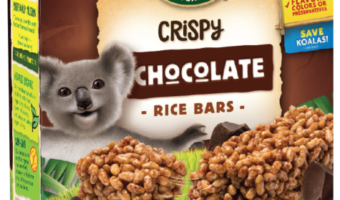
envirokidzchocolatebars.gifIn my last post Ollie got dosed, I suspected that Ollie had been exposed to dairy, but didn’t know how. Well, I am wondering no longer. I solved this whodunit. Yes, through a little detective work, I found out who the careless, neglectful, dangerous person was who dared to give my precious boy a dose!

It was me.

This is a cautionary tale, children, about the thrilling subject of careful label reading. Gather ’round.

Some of you may be familiar with EnviroKidz organic crispy rice bars. They’re good and easy and my boys like them. We usually buy the peanut butter or the berry flavor, which are dairy-free. Last time we shopped the boys asked for the chocolate, which we hadn’t bought before. I scanned the label, which like the other flavors, had the “May contain traces of peanuts, tree nuts, soy or dairy ingredients” in bold print at the bottom of the ingredients list.

Now, when I see “may contain”, I think that it was produced in a facility that also processes…yada yada yada. I think, “OK, no dairy is in the ingredient list or else it would say “Contains milk.”

Wrong!

In plain print up in the ingredients list is “organic milk chocolate”, which has as one of its ingredients “organic milk powder.” Hello dairy!

So while I think that their “may contain” bold print statement is incredibly misleading, and I am going to contact Nature Path foods about it, the responsibility lies with me for not having read the label carefully.

Live and learn.

Product Review: Cookies by Enjoy Life Foods

enjoylifesnickerdoodle.jpgRating: bluestar3.jpgbluestar3.jpgbluestar3.jpgbluestar3.jpgbluestar3.jpg

Product description:

Cookies by Enjoy Life Foods:

  • Soft-baked packaged cookies in a variety of flavors
  • Free of the top eight common allergens, also free of casein, potato, sesame and sulfites
  • Vegan
  • Kosher Pareve
  • Made with natural sweeteners

Review:

Yum, yum, yum! These soft cookies come in many flavors: chewy chocolate chip, double chocolate brownie, gingerbread spice, happy apple™, lively lemon, no-oats “oatmeal”, and snickerdoodle. It’s truly amazing that they are free of so many allergens because they taste so good and the texture is satisfying. My favorite is snickerdoodle, with double chocolate brownie in second place and chewy chocolate chip close behind. I wasn’t so thrilled with no-oats “oatmeal” and I haven’t tried the others (but would like to!).

What I like:

  • That my daughter and I can eat a delicious cookie and not have to worry about ANYTHING!
  • That there is no corn - a lot of gluten-free cookies are made with cornstarch and I am not eating corn right now (you can read why if you want to know).

What I don’t like:

  • The packaging - it makes a loud crinkling sound when I’m trying to sneak a cookie and I don’t want my daughter to hear! And it’s hard to get into to just grab a cookie.

Where to buy:

Whole Foods in California just started carrying a couple flavors. You can see a list of stores on the Enjoy Life website.

Allergen information:

From the website: “Our products are made in a dedicated nut- and gluten-free bakery in Schiller Park, IL. We’ve invested in a dedicated plant so that you can have the added confidence and assurance that you can eat Enjoy Life products without worries. We also require all of our ingredients to be certified allergen-free and perform routine testing to minimize the risk for cross-contamination and ensure ingredient quality. Our ingredient suppliers are required to complete non-contamination certificates for every ingredient that we purchase. Ingredients are additionally tested (based on the product) for gluten, casein, peanut and soy protein. Equipment is cleaned thoroughly after product and flavor changes following good manufacturing procedures. Finally, every Enjoy Life employee understands the severity of food allergies and intolerances and takes careful precautions to protect our customers.”

Allergy clothing and accessories

allergator.jpgIf you have a child with food allergies, you have probably had the uncomfortable (and scary) experience of people wanting to give your child food. It may have been a teacher at school, another mother or kid at the playground, or a store owner offering a piece of candy. If your child is old enough and well-trained, he will decline the offer, knowing that the food could make him sick, or worse. If your child is young (like mine), you can’t be sure that the words “no thank you, I can’t eat that” will be uttered every time, especially if it’s a sweet treat. It is pretty easy to keep an eye out for a potentially unsafe situation when you are present, but what do you do when your child is on his own, say at daycare, school or camp?

There are a number of companies (most created by moms) out there that are solving that problem with wearable warnings and even fashionable ways to carry around medication. Here are some that I have found (and like!):

  • Kristin over at AllergyMama.com has designed hip tote bags with an easy to access bottom compartment for medications. She also offers customizable belts, hats and bibs that can display allergy warnings. Fun colors and groovy prints make her products cool to wear.
  • Karina, the Gluten Free Goddess, has created a line of sassy t-shirts, sweatshirts, onesies and bibs for the gluten-free crowd, both adults and children. You can go with “Gluten-Free and Fabulous” or for kids “gluten is yucky” or a bunch of other fun sayings. I love her signature “Gluten Free Goddess” cupcake design myself.
  • Allergators, started by Shayr & Jimmy Guthrie, offers cute, stylish clothing for kids and a lunch tote with allergy warnings.
  • Ria at Check My Tag has developed cool and simple clothing with a noticable “Check My Tag – I have a food allergy” label stitched to the outside of the clothing and an inner tag with specific allergy information and instructions. This makes the information readily accessible even to people who may not know the child.
  • Denise and Le Ann at Lauren’s Hope offer a huge selection of medical ID bracelets. You can choose from many different styles (beaded, leather, braided) and then have an engraved medical ID tag that can be unhooked and interchanged with any of their bracelets, allowing you to change styles day to day.

If you have any other allergy-wear that you like, please let me know!

Picky eater or food sensitive?

donuts.jpgWhen people, especially kids, don’t like certain foods, we chalk it up to being picky. But could it actually be an unconscious rejection of a food to which the body is sensitive, be it an allergy, intolerance, or even celiac disease?

Take me, for example. I wasn’t diagnosed with celiac disease until age 32. After my diagnosis, I reviewed my past for missed clues – could somebody have figured this out earlier? Aside from the obvious symptoms I had as an adult (anemia, stomach problems), I realized that there were subtle clues beginning as a child. One was that I didn’t like foods that contained gluten! Hard to believe, but I didn’t like cereal, pancakes, waffles, donuts (what kid doesn’t like donuts?), bread or cake. I used to ask my mom for steamed rice for breakfast (rice is gluten-free) and at Thanksgiving I always devoured the potatoes (gluten-free) instead of the stuffing or pie (gluten and gluten). In high school, when other kids ordered sandwiches at the deli, I ordered turkey and tomato slices – no bread. Surely, my friends thought I was a bit strange! And even as an adult, before my diagnosis, I didn’t choose pasta or pizza or burritos (flour tortillas). Throughout my life I had unconsciously phased some of the gluten out of my diet.

Now, I’m not saying that someone should have diagnosed me with celiac as a child based on this dislike of certain foods, but I think it is good to be aware that if a child or adult has an inexplicable dislike for a food that most people enjoy, it could mean something.

Ask the Doc: How long to get gluten out of system?
questionmarkgreen1.jpgQ. How long does it take to get wheat or gluten out of your system?

A. No one knows for sure, but given the digestive rate, absorption of gluten and glutenin peptide fragments, and the turnover rate of the intestinal cells, about 3-7 days would be a rational guess. How much time it takes to recover from damage done by gluten, however, depends on a number of factors: the dose of HLA DQ2, DQ8 genes that you receive from your parents, the position of the genes of chromosome 6 (genes on the same side of the chromosome-”cis” position are more potent than on opposite sides of the chromosome-”trans” position), the reactivity of your innate system at the level of the intestinal cell, and on the adaptive immune system’s pre-programmed drive. That said, the more advanced your biopsy (Marsh III), the longer it will take to completely reverse the disease. Marsh III’s take about 2 years, while Marsh I’s may take 6 months to a year. All the more reason to have a biopsy at the time of initial diagnosis, and another one one year after being free from gluten.
Health and happiness,
Dr. Aron

Have a question?

Quinoa for Beginners

Don’t be afraid of quinoa just because you don’t know how to pronounce it! Let’s all say it together: “KEEN-wa”. By george, I think you’ve got it!

Whenever I serve quinoa to guests, people rave about it (which is fun, especially because it is so easy). Most people have never eaten quinoa and certainly would never attempt to make it, which is too bad because quinoa is yummy, healthy and easy to make! It has a light and fluffy texture that makes it a wonderful complement to any main course - try it with dinner instead of rice. My daughter loves it (and it’s funny to hear a 2.5 year old ask “can I have more quinoa please?”)

What is it? Quinoa has been called a “super-grain” because it has more protein than any other grain, and is a complete protein (similar to milk). It is high in iron, magnesium and is a good source of dietary fiber. It is also high in lysine, methionine and cystine and is easy to digest. There is no downside to eating quinoa!

How to cook it? Quinoa cooks like any other grain - you simmer it in liquid until the grain absorbs it. If you buy boxed quinoa you can follow the directions on the box. Some boxes say to rinse it first and some don’t. Quinoa naturally has a bitter coating that needs to be removed before it is edible, but most companies that sell quinoa have already done this so you don’t have to. I recommend mixing the white quinoa with the red quinoa. When cooked, the white quinoa pops and becomes fluffy, while the red maintains a little crunch - it makes for a great texture.

Here is the mix of raw quinoa grains in the pan:quinoaraw.jpg

And here are the grains after cooking (notice how the white grains have “popped”): quinoadone.jpg

And now for the recipe that garners the raves:

  1. Put some olive oil (1 tbs) in a soup pan .
  2. Crush some garlic (1-2 cloves) and cook it in the olive oil for a few minutes.
  3. Pour 1/2 cup white quinoa and 1/2 cup red quinoa in the pan and coat with oil. You can cook the grains in the oil for a few minutes to give it a little toasted flavor, or you don’t have to.
  4. Add 2 cups of water and 1/2 teaspoon salt. This salt ratio (1/2 tsp per cup raw quinoa) is very important, so don’t eyeball it!
  5. Bring to a boil, reduce heat, cover and simmer until liquid is absorbed, about 10-15 minutes. Use a fork or spoon to fluff the grains. Serves 4 people as a side dish.

Isn’t that easy? Now go make some quinoa and let me know how much you love it!

Read about other great gluten-free grains.

Cake for one?

happybirthday.jpgToday is my birthday. My husband is out of town and I didn’t bother to throw any kind of celebration for myself. No, I’m not asking for pity - I’m just trying to figure out how I can have some birthday cake! Am I allowed to make a cake for myself and then eat it by myself?

Hmmm… checking the pantry for mixes… I could make Pamela’s Luscious Chocolate Cake - I love it as cupcakes with some chocolate chips thrown in. Or there is Namaste chocolate cake - so rich, so grown-up. If I want to share with my daughter I could make Cherrybrook Kitchen’s Gluten Free Dreams chocolate cake mix since it’s free of nuts, dairy and eggs too. For a yellow cake, I could go with Dowd & Rogers Dark Vanilla Cake Mix - the chestnut flour gives it a unique and yummy taste. I would love to make 1-2-3 Gluten Free’s Delightfully Gratifying Bundt Poundcake, but that makes a big delicious bundt cake and I won’t be able to resist eating the entire thing, which would be quite gluttonous (but not glutenous!)

Not really in the mood for baking though, so I might just bite into my Scharffenberger Semisweet chocolate bar and leave it at that. Maybe a cake next year…