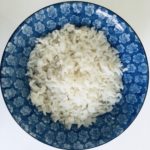
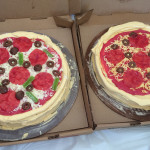
A gluten-free dairy-free egg-free birthday menu

butterflycakejpg.jpgMy girls turned 1 and 3 this month, their birthdays falling 10 days apart, so we had a double birthday party for both kids and adults.

Because of my family’s multiple food sensitivities, we made all the food. While it was an exhausting endeavor, I am proud of how it all turned out. We made way too much - the party could have been twice the size, but that’s ok - lots of leftovers!

So here was our gluten-free, dairy-free, egg-free, and nut-free menu. Almost everything could be made a day ahead.

SNACKS:

  • Tortilla chips & salsa
  • Potato chips
  • Tings (like Cheetos without the cheese)
  • Grapes and strawberries

LUNCH for the kids:

  • Sandwiches with bread made with Pamela’s Wheat-Free Bread Mix (egg-free recipe) - some with turkey and Tofutti non-dairy cream cheese and some with jelly (the jelly ones were the favorite)

LUNCH for the adults:

DESSERT:

OTHER GOODIES (these were NOT egg-free):

Think we went overboard?? Yep. Not sure I will ever do that again, but everyone loved the food and like I said… leftovers!

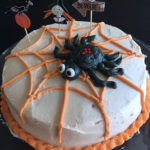
P.S. Thank you to both sets of grandparents and my sister for helping me pull this off. My mom (an artist, unlike myself) decorated the cake.

Rice Dream says it’s now gluten-free

ricedream2.jpgI picked up a box of Rice Dream non-dairy beverage (rice milk) at the grocery store yesterday and after years of warnings from fellow celiacs not to buy Rice Dream because it contained barley, I was surprised to find that it is now labeled gluten-free.

I called Rice Dream, which is part of Hain Celestial, which owns so many brands that they have customer service reps who sit there all day and read statements from their computers to answer consumers’ questions. Anyway, to get to the point: According to the customer service rep, Rice Dream has not changed their recipe. They now test “each batch” for gluten and say that the barley enzyme content is so small that the product can be considered gluten-free.

Currently, there is no U.S. standard for labeling something gluten-free, although it is in the works. You can read about the U.S. Food and Drug Administration’s proposed gluten-free labeling rule. For information about current worldwide gluten-free standards, see celiac.com’s explanation.

I have now idea what standards Rice Dream is using, but now that it is labeled gluten-free, I guess I will buy it…? I am a little hesitant, but I like that it is easy to find in stores and that they have lunch box sizes to take on-the-go. Plus, there are lots of flavors, like vanilla, chocolate, carob (for those that can’t have chocolate), vanilla hazelnut and chocolate chai.

Note: The gluten-free label is only on the beverages. Some flavors of Rice Dream frozen desserts have gluten - check the label.

Super Easy Greek Quinoa Salad

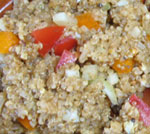
quinoasalad.jpgQuinoa salad is a great dish to bring to a potluck or serve at a lunch or BBQ. It is easy to make, it is unique, and people will love it.

Here is a very simple recipe that is gluten-free, dairy-free, soy-free, and egg-free. It can be made a day ahead.

Greek Quinoa Salad
Serves 8-10

Make quinoa using this basic quinoa recipe doubled (2 cups raw quinoa). Cook the quinoa ahead of time so that it has time to cool. To cool quinoa faster, transfer to a bowl and occasionally turn the quinoa with a spoon.

Once quinoa has cooled, add any combination of the following:
1 red or yellow bell pepper, diced
1 cucumber, diced
1 jar pitted kalamata olives, halved or cut in thirds
1 can artichoke hearts, quartered or smaller
1/2 red onion, diced
basil, chopped
optional: 2 chicken breasts, poached and chopped
optional: crumbled feta cheese

Then dress the salad to your taste with a simple oil & vinegar, or your favorite salad dressing.

Gluten-free focaccia (Italian pizza bread)
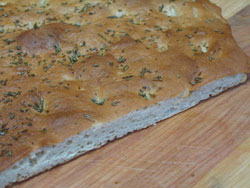
glutenfreefoccacia.jpgPamela of Pamela’s Products sent me this recipe for Focaccia using her Amazing Wheat-Free Bread Mix. I have now made several times with success. Below is the recipe as she sent it to me, and then I added my own suggestions. This bread is gluten-free, dairy-free, egg-free and soy-free.

Pamela’s Focaccia (Italian Pizza Bread)
1 bag Pamela’s Wheat-Free Bread Mix
1 yeast packet (enclosed in mix)
1 teaspoon sugar
1-3/4 cup warm water
1/4 cup olive oil (plus for the pan and sprinkling on top)

Combine yeast packet, sugar, and 1/4 cup warm water. Let foam for 5 minutes. Add olive oil, remaining 1-1/2 cups warm water, and Pamela’s Wheat-Free Bread Mix. Mix for three minutes. Put in a pan greased with olive oil, sprinkle top of dough with olive oil to help spread it in the pan, spread to sides until dough is approximately 1/4-inch tall. Rise for 1 hour. Bake in a preheated 400º oven for about 20 minutes or until brown. Great for sandwiches. Slice lengthwise.
Optional: Before baking add salt and green onions, or sun dried tomatoes, olives and goat cheese, whatever you like.
Pamela’s Note: Do not skimp on the olive oil. If you’ve never had Focaccia before, the olive oil should come off on your fingers while you eat it!

Alison’s suggestions:
The pan - I found the best way to do it was to spread the dough on parchment paper on a baking sheet. Mine was a big oval shape. The bottom won’t get crispy, but you are guaranteed to get it off the pan without sticking. I dipped my spatula into a plate of olive oil to help spread it.

Toppings - everyone’s favorite was chopped fresh rosemary and salt (I use coarse salt or sea salt). I also tried topping the focaccia with pizza sauce - bake halfway before adding the tomato sauce so it doesn’t get mushy.

Storing/serving - the focaccia is the best when eaten the same day it is baked, as it will lose its crisp as it sits. Then just toast it or re-bake it in the oven.

Doubling - I mixed 2 mixes in my KitchenAid stand mixer to make 3 big focaccia breads.

Overall, the focaccia bread was a hit with everyone who tried it. This is also good as “fancy” sandwich bread - try it with grilled sausage (cut lengthwise in half), as I did - yum! Thank you Pamela!

Related post:
Product Review: Pamela’s Amazing Wheat-Free Bread Mix

Bars for people with food allergies
larabarcherry.jpgEnergy bars, nutrition bars, granola bars, trail bars - everyone is crazy about bars! They are a great on-the-go snack for adults and kids, but what about people with gluten intolerance and/or food allergies? Many energy bars contain wheat flour, commercial oats or barley malt, so they are not gluten-free. Many contain nuts, peanuts, dairy, soy, or even egg, making them off-limits for people with these allergies. Instead of wading through the bar world on your own, let me help you! Here are some gluten-free bars, that are free of other allergens as well:

  • LaraBars - a blend of unsweetened fruits, nuts and spices
    • “LÄRABAR is completely gluten-free, which we confirm with Gliadin testing. Our packaging bears the CSA Celiac approved gluten-free symbol. LÄRABAR is gluten, dairy, soy and corn free. LÄRABAR is also peanut free and produced in a peanut-free facility. However, we cannot guarantee that our ingredients have not come in contact with peanuts prior to reaching our manufacturing facility.”
  • Aunt Candice Protein Bars - soft, dense, moist and chewy
    • “Our products are gluten and casein free and also soy, corn, peanut and yeast free.”
  • Oskri Organics Sesame Bars - crunchy and sweet, almost like candy, with either date syrup or molasses
    • “Our Sesame Bars are absolutely gluten free.”
  • Nature’s Path Envirokidz Crispy Rice Bars - light and crispy
    • “May contain traces of peanuts, tree nuts, soy, or dairy ingredients.” Be aware that each flavor actually contains some of these allergens, not just traces, so read the labels thoroughly.
  • NoNuttin’ Granola Bars - yes, that’s right, a real granola bar - with gluten-free oats!
  • Gorge Delights Pear Bars - all fruit
    • wheat, dairy, nut & gluten free”
  • Glutino Breakfast Bars - cereal crust on the outside and chewy fruit filling
    • “May Contain: Traces of peanuts, tree nuts and soy.”
  • Enjoy Life Snack Bars - dense and chewy
    • “no gluten, no wheat, no dairy, no peanuts, no tree nuts, no egg, no soy, no fish, no shellfish, no casein, no potato, no sesame, no sulfites, made with care in a dedicated nut- and gluten-free bakery.”

Is there a bar that is free of common allergens that you would recommend to others? Post your comments here.

Ask the Doc: Will my second baby have celiac?

questionmarkgreen1.jpgQ. Please help. I am 7 months pregnant, and my 3 year old child was diagnosed with celiac shortly after my husband and I found out about the pregnancy. I asked his GI doctor what to do about preventing the onset of celiac with our second child and she knew very little to tell me. I would like to know the percent chance that baby #2 will have celiac. Child #1 is the only person in the family with it as far back as we know. Should I breastfeed this baby? Do I need to be on a gluten free diet when breastfeeding? When should I introduce gluten in baby #2’s diet?

A. The best answer appears in the British Journal “Gut” 25 April 2007, from Bourgey, M et al. You must test yourself, you husband, your first baby for HLA-DQ2 and HLA-DQ8 genes. The lab must test for the alleles, or components of these genes. If you or your husband both have HLA-DQ2 with 2 copies of DQB1*0201, then there is a grerater than 80% chance that the new baby will have celiac disease. If the alleles of you and your husband are DQB1*0201 and DQA1*0501 and in a trans position, then there is a 68% chance for the baby. If these alleles are in a cis position, then a 23% chance is possible. If both of you have DQB1*04, then there is a 1% chance. If there is one copy of DQ8 and one copy of either DQB1*02 or DQA1*05 then a 1 in 50 chance. So you will need to contact Prometheus labs in San Diego to get these tests.

Breast feeding is safe and even helpful. You should be on a gluten-free diet while breast feeding. Do not introduce gluten until solid food is taken, which is usually after 6 months. Good Luck.

Health and happiness,
Dr. Aron

Have a question?

Are you itchy?

Many people suffer from eczema - chronic dry, red, itchy rashes on different parts of their bodies, like the face, forehead, neck, elbows, knees, or hands. According to the American Academy of Family Physicians website, “The most common chronic illnesses associated with food allergies are eczema and asthma.” So before you reach for the steroid cream again, consider that what you are eating could be causing that itch.

If you need some further convincing, read my friend Kurt’s Story. Eczema was one of his many “incurable” health problems that disappeared with a change of diet.

Autism and diet - what’s the connection?

gfcfdietblue1.jpgI find the possible connection between autism and diet fascinating. Because of my own experience with celiac disease, I know what food can do to one’s (my) brain. Many parents, researchers and doctors report that children with autism have shown mild to dramatic improvements in speech and/or behavior after gluten (a protein found in wheat, barley & rye) and casein (a protein found in milk) were removed from their diets.

Autistic behaviors can include:

  • Poorly developed or delayed language skills, or speech pattern abnormalities
  • Failure to follow directions or respond to own name
  • Lack of need for socialization, prefers to play alone, seems to be in own world
  • Inability to make friends, not interested in other children
  • Repetitive or odd body movement patterns (hand-flapping, rocking)
  • Ritualistic behavior; child gets “stuck” doing the same thing over and over
  • Lack of, or poor, eye contact

According to studies, autistic children appear to have more gastrointestinal symptoms than children without autism, and that these problems improved on the diet. Researchers found that these children have permeable intestinal tracts (often referred to as ‘leaky gut’), and cannot properly digest gluten and casein proteins. The proteins enter the bloodstream before they are fully broken down and act like morphine in the body. These drug-like substances alter the person’s behavior, perceptions, and responses to his environment, thus causing behaviors which have been classified as autism.

The medical community is still researching the effectiveness of the gluten-free, casein-free diet in the treatment of autism, but there are many stories from parents who see the changes occur in their children. While this dietary treatment may not be effective for all autistic children, it certainly seems like a good idea to try the gfcf diet. Whether you have a personal experience with autism or not, you won’t believe these incredible diet success stories written by parents of autistic children.

For more information on autism and diet, visit these website pages:

There are lots of other websites and blogs dedicated to the topic of autism, as it is a growing problem. Feel free to add a comment with other sites you recommend.

Related reading: Gluten Affects Learning and Behavior