 There are many stories about how blue cheese came to be. They all involve cheese, bread and a cave. The basic tale is this: someone left a piece of bread in a cave where the cheese was being aged. The bread became moldy and the mold spread to the cheese. Someone came back to the cave days or weeks later, and yum yum yum – moldy blue cheese! An industry was born. They began to purposely inject cheese with bread mold during processing, leading to the creation of blue or green-veined cheeses such as Roquefort, Gorgonzola, Cambozola, and Stilton.
Do veined cheeses contain gluten? This question comes up a lot when people have to change their diet due to celiac disease, gluten intolerance, or a wheat allergy. After conducting my own blue cheese investigation, I have the answer: some blue cheeses do contain gluten, but most do not.
Some blue cheese is still made the old-fashioned way using bread mold. However, most cheeses produced in the U.S. today are not started with a bread mold because it’s not efficient or economical. Cheesemakers can now buy liquid blue mold that is made in a laboratory (as one blue cheese manufacturer explained to me). These do not contain gluten.
Yup, that’s right. You can eat blue cheese. Just make sure it is one of the gluten-free ones listed below. I will update this list as I get more information.
Gluten-free blue cheeses:
- BelGioso gorgonzola – verified via website that all their cheeses are gluten-free
- Marin French Cheese Factory blue cheese – verified via phone
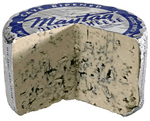
- Maytag blue cheese – verified via phone (it used to contain gluten, but now does not)
- Montforte blue cheese and gorgonzola – verified via phone
- Pt. Reyes blue cheese – verified via phone and website
- Rosenborg blue cheese – verified via web
- Paladin MonSalvat blue cheese – verified via email
Gluten-free blue cheese stuffed olives:
- Armstrong Olives – verified via phone
Gluten-free blue cheese dressing:
- no info yet
NOT gluten-free:
- Saga blue cheese – verified via email that it contains wheat




gaile says
oh that is awesome news. Do you perhaps have any info on some goatmilk blue cheeses for those of us that can’t handle cow? thanks!
Julie says
I believe Lighthouse Blue Cheese salad dressing is Gluten Free… mfr. in Sandpoint, Idaho and delicious. Most of their dressings are GF. Thank Goodness. They are sold in the refrigerated section with dressings like Maries.
lyn says
Hi Alison
I read with interest (and appreciation, and gratitude for your hard work) your writing on the blue cheese saga–pun intended! However, while I know that some blue cheese does get its veining from a mold that was started on wheat bread, science tells me that does not mean that the mold that grows on the bread (and then is spread via growth throughout the cheese as it
develops) also has wheat as a constituent, or even contaminant. The mold is a living organism that happened to get its original start in life by eating
bread so to speak, but that doesn’t transform it into bread or bread’s constituents any more than I am made of Brussels sprouts because I eat them (well,
sometimes!). I have actually called Saga and spoken to the cheese expert in the dairy (not the person on the phone in front) who confirmed my thoughts. She also says that, as with many companies now, they would rather say that something is NOT gluten free than have to certify that it IS GF etc– big problem with the pending legislation. I have noted several companies actually changing their formulas, I think, to avoid the whole issue (and of course a lawsuit!) Leaves us all back in the boat we have been in–reading the label but understanding how things are made as well. Think vinegar, alcohol and so forth.
Just some thoughts, and thanks again for all your hard work to make things easier.
Best Regards,
Lyn
Jill Vanderweit says
Thank you, thank you, thank you! I sadly put aside bleu cheese 5 years ago, and have lately been craving it. I’m going to the store immediately to buy gorgonzola and asparagus!
Sarah says
Just wanted to say thanks for this. I took your list to Whole Foods to get some bleu today, and the people at the cheese counter told me no bleus were GF. I said, um, not according to several cheesemakers’ websites! I grabbed some Pt. Reyes, and then I gave them my copy of the list so they could do some research, and they seemed pretty excited by it.
Ursula says
Thank you for this list! I’m glad I found it!
Bethany says
I should like to say that as far as blue cheese salad dressings go, if you’re in Austin, SASS’s salad dressing is GF (and darn tasty!). It’s in HEB in the refrigerated part of the produce section, and apparently Whole Foods is carrying it, but I haven’t looked for it there.
http://www.freshdressings.com/bleucheese.htm
Margo Constant says
Hi,
Can’t tell you how grateful I am to learn bleu & gorgonzola cheeses are GF! I’ve not touched them in the four years I’ve been on this diet, and sure miss them! I’m 72yrs old, and only learned about this celiac problem I have had all my life a few years ago, and, needless to say, sure miss some of my foods. Thank you, thank you, thank you!
Margo Constant says
I wrote yesterday to thank you for your list, but forgot to add that Boar’s Head blue cheese is also GF. This is the only one I knew about since being diagnosed a few years ago, and thought someone might be interested.
Sonia says
How about those other cheeses like Gorgonzola – I hate to ask you to do more research, but if you already know, this is definitely an important topic!
Thanks!
Sonia
Terri says
I have read the other comments and have tried the so-called GF Blue Cheese but I still get a reaction to it, not pleasant! I find it odd that no one is asking or telling what is in the Laboratory Blue Mold Liquid?! If it is synthetic, is it genetically similar enough to be considered bio-synthetically equal. Is that why my body still can not tolerate it? And, that most of the references refer to wheat. What about Rye? I don’t know how to get my questions answered but if someone out there knows a way, please help us all. Thanks, Terri
Jim says
If you are “still getting” a reaction to the Gluten Free blue’s listed, keep in mind that one of the effects of CD is Lactose intolerance. The reaction is very similar, can usually be cured by taking Lactaid or similar product as directed.
Anna says
I am recently “self diagnosed” as being sensitive to gluten.
I read everything I could get my hands on and find it hard to believe that a trace amount . . could make you sick . . or that it is definitely a “life sentence”.
My intuition tells me there is “no way” that a trace amount would definitely hurt “everybody” with CD. Sensitivities vary . . so maybe they are erring on the side of caution. Also body chemistry changes through out your life. . . You can have an allergy one year and not the next year. They are making some very strong definitive statements, and applying them to everyone with a sensitivity. I would love to see the data. Anyone know what tests have been done?
Connie D. says
I just wanted to add about the blue cheese discussion that I am cautious about purchasing it and eating it. I work at Trader Joes and can’t get an answer from customer service about how the blue cheese that is sold at Trader Joes is made! Trader Joes recently havelabeled a mixed salad as GF, but, it contains Miners Blue Cheese. Since I am not able to get an answer from someone who actually knows about what gluten free means and the importance of sourcing how it is made, I have determined that I will not be buying any of the beloved blue cheese products from Trader Joes, even if labeled GF!
Another note, since I have been gluten free my migranes have ended. This alone is a miracle.
alison says
Thanks everyone for your blue cheese comments — we are all in this together to figure this stuff out!
Connie D,
That is too bad about Trader Joe’s — there should be no secrets when it comes to ingredients!! That is great about your migraines. Many people have eliminated migraines from being gluten-free: Suffer From Migraine Headaches?
Karen says
I was diagnosed several years ago, as an adult. I’ve had reactions from a number of things (primarily hidden soy sauce, since I’m generally very careful) but I’ve never had a reaction from ANY bleu cheese or gorgonzola — and I eat it frequently. I am also not convinced that the mold transfers gluten from the bread.
Shauna Carr says
Re: the mold transferring gluten to the bread and Lyn’s comments.
To me, it seems absolutely reasonable to think that the mold itself does not contain gluten. Thinking that the mold is somehow ‘made of gluten’ would be a bit silly, yeah? (Well, I think, don’t know much about mold makeup, myself) But, and this is coming from a totally uneducated layman here, I do wonder about a couple potential contamination risks.
How do the companies harvest the mold from the bread? I would think it would be a real challenge to ensure that not even a molecule or two of the bread is not scooped up in the process. As part of that, because the mold is breaking down the bread all the time, how can they check to make sure that in a particular section of mold, ALL the gluten has been broken down and ‘eaten’ by the mold? I would imagine it would be possible to have gluten that has not been fully denatured in some areas of mold. At least a few molecules of it, anyway.
More than thinking that mold would contain gluten, I would think that contamination would be the real issue; that a few ‘not fully digested’ molecules of the bread would be harvested with the mold, and still have gluten that can affect those who are extremely sensitive, yes?
It’s a pain for the businesses affected who have to look at it this way, and I can understand companies finding it really frustrating, because a few molecules likely don’t affect most people. As one of the hyper-sensitive folk, however, I admit that I am glad to know that they are being extra careful over stuff like this.
And just for those curious – yeah, a few molecules really can set some of us off, best I can tell. Kind of like those poor folk who can be in the same room as an open bag of peanuts and go into shock, some of us can react to wheat or gluten almost as badly. I end up wearing a paper mask when I go out anywhere there might be wheat at this point, because otherwise my throat starts to swell up on me.
So, yeah…VERY happy to know that when something says gluten free these days, it’s REALLY gluten free.
Susan says
I’m so happy to find this list of verified GF blue cheeses. My 12 year old daughter has celiac disease. If you have a diagnosis of celiac disease it doesn’t matter whether you have a noticeable reaction to gluten or not – the prescription is to strictly avoid it. Small amounts of gluten can still do damage to your intestinal lining. My daughter never had a typical reaction (I wish she did because then she would know if she’s eaten something with gluten). Her symptoms were anemia and short stature, but the medical tests leave no doubt she has celiac disease. Thanks again and I’ve bookmarked this site!
Greg says
Just a few comments, particularly referring to Anna’s questions. The reason that people are talking about the presence of gluten being an issue for everyone, not just some, is that people with celiac disease should not consume any gluten at all. Just because a celiac may have no reaction to it at a certain level, that does not mean that the gluten intolerance reaction is not doing harm to us internally. This is a completely different thing to being allergic. If a wheat/gluten allergic person can tolerate a certain level without symptoms, then they can decide to consume something that is not 100% gluten free.
Michelle says
Hi, I would just like to ask if you know where to purchase the liquid blue mold? Thanks.
Pmheart6 says
Canada and the celiac group/assn./etc.
Did a study they actually found ~4 blue cheeses made from bread harvested mold. They found that there was 1 ppb or less oc gluten in these cheeses. And 20 ppb is the cutoff to be considered GF.
Serious Cheese: Is Blue Cheese Gluten-Free? | Serious Eats
Jul 21, 2009 … Photograph from WordRidden on Flickr Your first reaction to this headline might have been, “What do you mean, …
http://www.seriouseats.com/2009/07/ser... – Options
megan says
Hi, I have rheumatoid arthritis, and wondered why it would seem to flare up after eating blue cheese as opposed to any other cheeses…..well I just found out I have Celiac’s, so it all ties in together now. Thank you!
Michelle Fire Eater says
I just received the following email from Brianna’s dressings, which makes a fantastic blue cheese dressing. With blue cheese, I stay away from artisan cheeses, and also contact each company to be sure. I think some folks may have a reaction to the molds themselves, such as a fever, rather than any gluten in the mold. The highly sensitive, I think, should just stay away, as even trace amounts are trace amounts – confirmed celiac’s have an autoimmune problem, not an allergy and should not ingest ANY gluten whatsoever and should err on the side of safety until proven otherwise.
From Brianna’s:
To the best of our knowledge all of our products are gluten free, with the exception of Asiago Caesar, Chipotle Cheddar, Lemon Tarragon, Thousand Island, Monterey Ranch and Ginger Mandarin. YOU CAN ENJOY BRIANNAS TRUE BLUE CHEESE!!!!
Please contact me again if I can be of further service. We appreciate your business!
Best Regards,
Carin Simmons
Customer Service
Del Sol Food Company, Inc.
alison says
Thanks for the info Michelle! I wonder what’s in Brianna’s that makes those other flavors NOT gluten-free? I was actually surprised by that.
Tina says
We use Walden Farms Dressings. They are gluten free, dairy free, soy free, etc. and are very good. They carry them at Meijer stores and they aren’t any more expensive than any other dressings.
Markie says
@ Jim, on April 26th, 2009 – Lactaid DOES contain gluten!
Mollie says
Hi there,
Thanks so much for this informative post! I linked to it from my GF website in a list about products containing hidden gluten.
http://www.thealmondflower.com/p/hidden-gluten-beware.html
Thanks again!
Mollie
Elizabeth says
I have MS and I have been told to switch to a low gluten diet and I love blue cheese. When I looked at sights they said that all cheeses were gluten free except blue and so I thought I could not have it, but the other day I went to the grocery store and said forget it I am getting blue cheese dressing. I looked on the food facts on the back and at the bottom it said it was gluten free. The dressing is Wish-Bone Chunky Blue Cheese. Just thought this might help if anyone was wondering!
Castello says
Rarely does a blue cheese taste great when gluten-free – but it is possible
Heather says
Marzetti (www.marzetti.com) lists all of their salad dressings, to include “The Ultimate Blue Cheese Dressing” that are almost all Gluten Free!!
peter blewett says
Was able to verify this list, with these exceptions:
1. Just off the phone with Marin French Factory, and they said the cheeses that they make, with the exception of the blue cheese, are gluten free. They did say that they do not certofy the clue cheese as GF.
They make brie, camembert and blue cheeses, but they stock other kinds of cheeses from other manufacturers, and so did not want to verify the cheeses they do not make.
2. Unable to reach Montforte (Wisconsin) and BMI (makers of Paladin Montsaldat, Gran Palador, and Regina Blue) to verify GF.
Verfied: BelGioso, Maytag, Point Reyes, and Rosenborg as GF.
matt sullivan says
very helpful answer…thank you