Non-Celiac Gluten Sensitivity

Many people test negative for celiac disease, but feel better — I mean in a life-changing way — on a gluten-free diet. What does this mean? That it is all in their heads? (Some doctors have certainly made this claim!)

Research is being conducted on the possibility that some people have non-Celiac gluten sensitivity (NCGS). This means that they would test negative on all the strict-criteria celiac blood tests and biopsy, but still could have mild to severe health problems caused by eating gluten. Unfortunately, many people who are gluten-sensitive are being told that since they don’t have celiac disease, they do not need to follow a gluten-free diet. Some of these people will go on a gluten-free diet anyway (and are never followed or recorded for statistics), and some people will walk away from the notion that gluten could be making them ill. They, of course, are the ones who suffer.

Read more about non-Celiac gluten sensitivity:

Ask the Doc: Difference between celiac disease & gluten intolerance?

Celiac Disease Versus Gluten Sensitivity: New Role for Genetic Testing and Fecal Antibody Testing?

Challenging the Gluten Challenge

Let’s talk about POO

toilet.jpgNo one likes to talk about poo. POO is TABOO!

Since being diagnosed with celiac disease and becoming a mother of children with food allergies, I feel I have become somewhat of a poo analyst (hmmm… business cards?) It’s just that after you clear the stuff you are sensitive to out of your system, you are very aware of any changes in your stool. When people come to me for advice, I often ask about it (poo), because there is a lot to be learned from it (again, poo).

One thing is for sure — people don’t know what a normal stool is, and often people assume that having constipation or loose stools is normal because they have lived with it for so long.

I did some research and it turns out that there is a way to classify poo – with the Bristol Stool Chart, which categorizes stools into 7 types.

What is your stool type?

Type 1 = Separate hard lumps, like nuts (hard to pass)
Type 2 = Sausage-shaped, but lumpy
Type 3 = Like a sausage but with cracks on its surface
Type 4 = Like a sausage or snake, smooth and soft
Type 5 = Soft blobs with clear-cut edges (passes easily)
Type 6 = Fluffy pieces with ragged edges, a mushy stool
Type 7 = Water, no solid pieces, entirely liquid

Healthy stools are usually considered to be those falling into categories 3 or 4, the ones that are the most comfortable to pass. Now, if you are really interested in this, and need more clarification on the stool types, and no one is looking, go check out the visual of the Bristol Stool Chart.

The relationship between stool health and food sensitivities

It is interesting to note that celiac disease can present with either constipation or diarrhea as a symptom, and sometimes a person can even alternate between both. Most people with celiac disease or gluten intolerance say that if they inadvertently get gluten, their stool will change for the worse.

With food allergies, it is common to have diarrhea as a symptom. The first time I knew my daughter had an allergy to avocado, she had diarrhea that began about 2 hours after eating it, and continued for 2 weeks! A pediatric nurse told me that the reason the diarrhea was green and smelly was because the food was going through the digestive system too quickly and the result was that bile (which is green) was being excreted. My daughter’s unusual avocado allergy was later confirmed with a skin test.

When my daughter was older, I removed dairy from her diet because eating it caused her to have large, smelly, soft, greenish stools (accompanied also by rashes). Her stools improved, but she sometimes complained of tummy aches and her stools were still not “right.” I had a suspicion that it could be soy, since she had started eating more of it (most dairy alternatives are soy-based). I have recently removed all soy from her diet and sure enough, her stools are now in the healthy range (which can also be characterized, in my opinion, by a clean wipe). No more tummy aches and improved behavior too. Her dairy and soy intolerance were confirmed by a stool test.

Why does this matter?

There are certainly times when a person’s stool may be out of the healthy range and it is not celiac disease or a food intolerance or allergy (eating a lot of certain types of fruit, for example, or a case of food poisoning). But if a person is consistently out of the healthy range, it may be an indication that something else is going on — an immune system response perhaps. In that case, there may be other damage occurring in the body and it is important to remove the offending food from the diet. Please see your doctor for testing and advice.

Whew — after writing all that, I’m pooped!

Related reading:

Symptoms of celiac disease
Allergy vs. Intolerance
Corn and my baby

Tell a friend!

sflcardsmall.jpgIt always makes me happy when someone tells me that they gave out my website address to a person in need of help. So, to make it easier to tell a friend about my site, I created business cards that you can print yourself, cut and keep with you just in case someone starts talking to you about their ill health.

To print my cards, just click here to open a page of cards and then print from your computer. They will look fuzzy, but they print clearly. They are not exactly quality business cards, but it’s all I’ve had time to do for now!

Thanks for sharing my information about celiac disease, gluten intolerance and food allergies with others!

-Alison

Why are food allergies on the rise?

arrowup.gifI often get asked why more people have food allergies today. Some people are concerned, others are skeptical. I hear the tone in the person’s voice — they are thinking that food allergies are somehow invented by parents. They might say something like “When I was a kid, there weren’t any food allergies around” as if to say that people in society today have become neurotic, blaming food allergies for everything.

The fact is that food allergies are real and are on the rise. That is why we are hearing so much about it now. More kids today have food allergies than when we were kids. According to one study, peanut allergy doubled among children between 1997 (1 in 250 children allergic to peanut) and 2002 (1 in 125 children allergic to peanut).

Why have food allergies become more prevalent? No one knows the answer, but here are a few theories, as explained in the Food Network special show Edible Enemies about food allergies (it will air again on October 19 at 10 AM):

1. Mothers are ingesting more allergenic foods like peanuts and breastfeeding their children and then causing an allergy. According to Dr. Scott Sicherer, researcher at the Jaffe Food Allergy Institute at Mt. Sinai, studies have shown that this doesn’t seem to be the case. [I have read other opinions, however, that say that this might be a cause because the food proteins pass through the breast milk, sensitizing the child.]

2. We are eating more peanuts. According to Dr. Sicherer, there isn’t really evidence of this.

3. The Hygiene Hypothesis or Cleanliness Hypothesis

“We’re living in such a clean lifestyle that our immune system becomes misdirected. It’s looking for something to do. [We] wash our hands all the time, we have vaccines that keep us from getting germs, if we get an infection we take antibiotics right away. And instead it ends up attacking things it doesn’t need to, and in this case, food proteins, causing food allergy.” - Dr. Scott Sicherer

4. Modern day food processing

“This may be one of the reasons why food allergies are on the increase, because we’re being exposed to these microscopic amounts, in very subtle ways, that may not produce a full-blown allergic reaction, but may continuously sensitize the body. Today’s kids are most at risk since their immature immune systems can’t cope with ever-earlier exposure to a large number of readily available processed foods.” - Dr. Richard Firshein

Examples: the addition of milk proteins (whey and casein), soy protein and wheat to foods that we are consuming — just check the labels of the foods at your house and you will find these ingredients in almost everything!

Other theories:

  • “One explanation for this phenomenon as it relates to peanut allergies may be the way the nuts are prepared. Most peanuts in the U.S. are dry-roasted at high temperatures, and experts say the high temperatures may change the protein structure of the nuts, making them more allergenic. In China, on the other hand, most people eat boiled peanuts, and Asians have a much lower rate of peanut allergies.” (from Qualityhealth.com)
  • The rise in food allergies may be caused by a lowered immune function due to increased antibiotic use, vaccinations, high processed food and pesticide use. (Food Allergy Initiative website)

Whatever the reason, this rise is alarming. Many parents with no serious food allergies are finding, sometimes by terrifying circumstances, that their children have them. I am hopeful that some sort of cure will be found in the near future.

You can learn more about food allergy from the doctors at the Jaffe Food Allergy Institute:

How to have an allergy-free Halloween

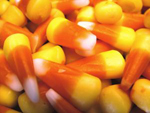
candycorn.jpgThis will be the first Halloween that my daughter goes trick-or-treating. We’ll probably only go to a few neighbors’ houses, but there is also a Halloween parade down a main street where the shop owners give out candy. As a parent of a child with food allergies, I am feeling a little anxious about monitoring every piece of candy that she receives. I imagine other parents are feeling the same way.

So, I’ve come up with 4 approaches for how we can make Halloween enjoyable for our little ones:

1. The Go-With-the-Flow Approach

How it works: Let your child collect candy and then investigate which pieces are safe and which aren’t.

Pros: You don’t have to do any planning ahead of time.

Cons: What if none of the candy your child receives is safe? Also, this can be time-consuming - will your child wait patiently (ha!) while you check the ingredients?

2. The Fair Trade Policy

How it works: Buy a variety of safe candy ahead of time. Let your child collect candy and then trade unknown or unsafe pieces for the safe ones.

Pros: Your child gets the fun of trick or treating, doesn’t stand out from the crowd, and feels like it is fair that they get the same amount of candy that they collected.

Cons: Your child has to be trusted to not eat any unknown or unsafe candy until he/she can make the trade with you.

3. The Community Outreach Program

How it works: You supply candy or a list of safe candy to the houses that you will be visiting.

Pros: This is good for little kids that may only be visiting certain neighbors and friends. You don’t have to worry about him/her eating something that is not safe.

Cons: This won’t work for older kids who are out with friends and visiting many houses, you have to go around to people’s houses ahead of time, and you have to trust your neighbors to remember.

4. The Just-Say-No-to-Candy Campaign

How it works: Sounds extreme - candy is evil! - but it just means offer non-food treats, like little toys, stickers, etc. This can be done in conjunction with The Fair Trade Policy, or with The Community Outreach Program.

Pros: No need to worry about ingredients, kids love little toys

Cons: Kids probably love candy more than toys! But perhaps given the choice, they may pick toys over candy some of the time, which can help.

Resources to help you have a safe Halloween:

There are many companies producing nut-free candy:

Looking for dairy-free chocolate?

And don’t forget the allergen-free lollipops!

Here is a list of non-food treats from a page from the National and Community Service website about making Halloween more inclusive for kids with diabetes and other health concerns:

  • Temporary tattoos
  • Stickers
  • Pencils
  • Fancy erasers
  • Pencil toppers
  • Crayons
  • Coins (pennies, nickels, dimes)
  • Small novelty toys
  • False teeth
  • Superballs
  • “Slime”
  • Miniature magnifying glasses
  • Plastic jewelry/decoder rings
  • Necklaces
  • Glow-sticks
  • Tiny decks of cards
  • Plastic medals
  • Fake money
  • Origami paper & instructions
  • Bubbles

Well, I feel better now and I am looking forward to taking my little pink fairy door-to-door for some Halloween treats!

How will you make sure your Halloween is safe?

Ask the Doc: Sources of fiber?

questionmarkgreen1.jpgQ. I was told I should eat more fiber. So my husband told me to start drinking Metamucil. Is that a good source of fiber? Is Metamucil gluten free?

A. Metamucil is soluble fiber. Other forms of soluble fiber are oats (if you buy your oats from a manufacturer that only produces oats you’re safe from injurious gluten peptides), and stemmed vegetables. Brown rice and other non-gluten-containing grains such as amaranth and quinoa have insoluble fiber. You need a mixture of both kinds of fibers for optimal bowel health. Berries are another source, especially blackberries, raspberries and boysenberries. Basically, there are a lot of non-gluten sources of healthy fiber, so enjoy!
Health and happiness,
Dr. Aron

Answer to “Is Metamucil gluten free?”: According to the Metamucil website, all Metamucil Powders and Capsules are gluten-free. Metamucil Wafers, however, contain gluten (Apple 0.7g/dose; Cinnamon 0.5g/dose) because they have wheat flour as an ingredient.

Have a question?

Gluten-free in The Land of Pasta?

italianflag3.jpgFor anyone on a gluten-free diet, finding a place to eat while traveling can be difficult and at the very least requires some effort. So how could one even consider traveling to Italy, the land of pasta and pizza? Seems like it would be really tough, doesn’t it?

Actually, Italy is one of the countries with the highest prevalence of celiac disease. Because of this, apparently all children are screened for celiac disease by the age of 6, whether they are showing symptoms or not. If someone of any age shows symptoms, the awareness is there to recognize that it could be celiac and get it diagnosed right away. In an article on the University of Chicago Medical Center’s website, Stefano Guandalini, MD is quoted as saying, “In Europe, it typically takes a few weeks to go from the first symptoms to a diagnosis. In the U.S., the average lag time between onset and diagnosis is 11 years.” Boy, we have a long way to go!

I have not been to Italy since my diagnosis of celiac disease, and have wondered if it would be difficult or if the awareness is really there. If you have wondered the same thing, then you must read Gluten-Free Girl’s post eating gluten-free in italy. It will make you want to go there ASAP!

From the mouths of babes…

cow2a.jpgHere’s a quick anecdote to peek into how my 4 1/2 year old son understands his dairy-free diet.

Tonight, Ollie had a glass of rice milk with dinner. He proudly pointed out how much of it he had drunk and told me that it was good that he had gotten his protein (pronouned pwoh-teen).

Then he asked in his very high voice, “But mom, how do the cows get the rice in?”

To Ollie, his milk is just a different flavor of cow.